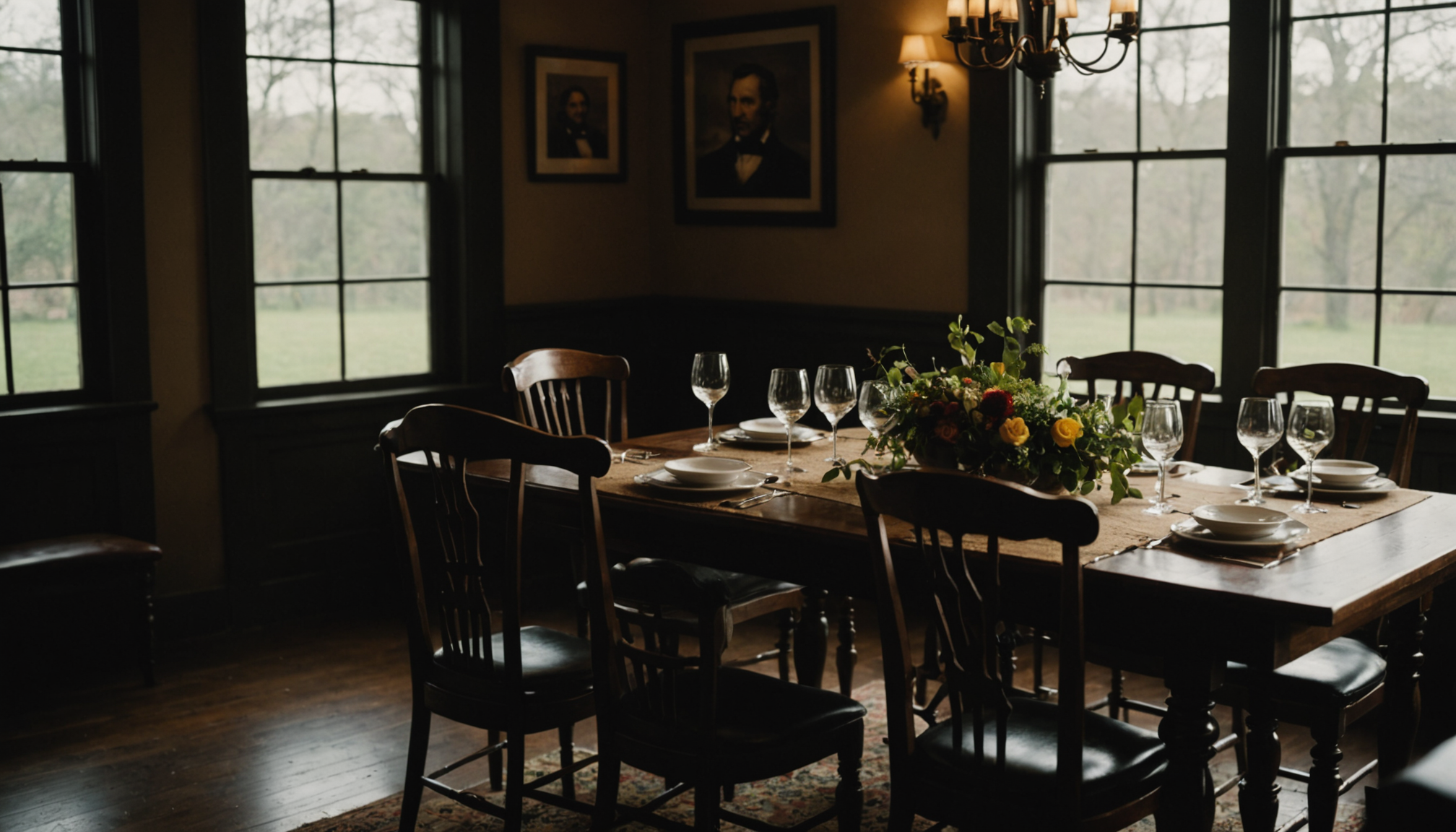
Private Dining Nashville: 5 Questions That Reveal Real Local Sourcing
The private dining coordinator smiled and said, "Of course we can customize the menu." What she didn't mention was that "customize" meant choosing between chicken marsala and salmon — both sourced from the same broadline distributor that stocks every other banquet room in the city.
TL;DR
- Most Nashville private dining menus are fixed banquet packages dressed in seasonal language — a few pointed questions will expose the difference in under ten minutes.
- The real tell isn't the room, the linens, or even the price per head: it's whether the kitchen actually talks to its farmers before building your menu.
- After reading this post, you'll have a five-question checklist you can use with any private dining coordinator to find out exactly what you're walking into before you sign a contract.
---
Why Most Private Dining Menus Never Change
Walk into the back-of-house storage at the average Nashville event venue on a Tuesday in January, and you'll find the same cryovac proteins and frozen mise en place you'd find in July. The menu on the website says "seasonal and local." The delivery truck tells a different story.
This isn't a Nashville-specific problem — it's a structural one. Large venues that run private dining rooms alongside a full dining room need consistency, speed, and scalability. That means locking in a banquet menu six to twelve months out, negotiating volume pricing with a broadline distributor like Sysco or US Foods, and training a banquet team to execute a narrow set of dishes flawlessly. The result is a room that photographs beautifully and food that tastes like it was designed by committee.
The economics are real: in 2026, a mid-size Nashville venue running 80 to 120 private covers per weekend can negotiate protein costs down by 30–40% by committing to a fixed distributor SKU list. That savings goes to the venue's margin, not to a Tennessee farmer. When you understand that incentive structure, the question "do you source locally for private events?" starts to sound very different.
The venues that actually do source seasonally — where the chef is on the phone with a farm in Leiper's Fork or Robertson County the week before your dinner — have made a deliberate, expensive choice to work differently. That choice shows up in how their coordinators talk about menus, timelines, and flexibility. It also shows up in how to read a seasonal menu for real sourcing signals before you ever book a site visit.
---
Questions That Reveal Real Local Sourcing
Here is the checklist. Ask these five questions in this order. The answers — and especially the hesitations — will tell you everything.
1. "Can you show me the menu you'd propose for my date specifically?"
A venue with a fixed banquet package will email you a PDF within twenty minutes. It will look polished, it will have the word "seasonal" somewhere in the header, and it will be identical to what they offered the corporate group last Thursday.
A kitchen that sources for the season will pause. They'll ask what month you're booking. They'll say something like, "We'd want to know what's coming in from our farms around that time before we lock anything down." That pause is worth more than any ingredient list they could hand you.
2. "Which farms or producers are you sourcing from right now — not six months ago, right now?"
This question has a right answer and a vague answer. The right answer includes actual farm names: Bells Bend Organics, Delvin Farms, Bear Creek Farm, White Oak Pastures. The vague answer includes phrases like "regional suppliers," "local partners," and "farms throughout Tennessee." Generic geography is not a sourcing relationship.
If the coordinator has to check with someone before answering, that's actually a good sign — it means there's a real back-of-house conversation happening and the coordinator just isn't the one having it. If they answer immediately and confidently with nothing specific, you're looking at marketing language.
3. "If the vegetable or protein you've planned around isn't available the week of my event, what happens?"
This question separates kitchens that source locally from kitchens that source locally when it's convenient. A kitchen genuinely embedded in seasonal supply knows that crops fail, harvests run short, and weather in Middle Tennessee does exactly what it wants. They'll have a clear answer: the chef calls the farm, pivots to what's ready, and updates you. They might even frame this as a feature — "some of our best private menus have come from a last-minute pivot to something we hadn't planned."
A venue running a fixed banquet package will look confused by the question. They don't have a contingency because there's nothing to contingency — the protein was ordered from a distributor two weeks ago.
4. "Will the chef who cooks my event be building the menu, or will it come from a banquet template?"
The answer to this reveals the kitchen structure more than almost anything else. A farm-driven restaurant that takes private dining seriously has the same chef — or a chef with the same sourcing philosophy — building the event menu that builds the à la carte menu. The same scrutiny that applies to a chef's tasting menu applies here: is there a human being with a point of view on this food, or is it being assembled from a spec sheet?
Banquet kitchens often have a separate event team that executes a template. That's not necessarily a scandal — but it does mean you're not getting the restaurant's actual kitchen. You're getting a parallel operation wearing its logo.
5. "Can we schedule a tasting that uses the actual menu you're proposing for my date?"
This is the pressure test. A kitchen sourcing seasonally for your event can build a tasting around what will actually be on the table. A venue running a fixed menu will schedule a tasting from the standard package — and that tasting will taste fine, because it's been executed hundreds of times. What you won't be tasting is what you'll eat on your night.
Venues that do real seasonal private dining in Nashville will often suggest scheduling a tasting three to five weeks out from your event date, because that's when they'll have better clarity on what's coming in from their farm partners. That timeline is a feature, not a scheduling inconvenience.
---
Private Dining Nashville: Seasonal Flexibility Is the Tell
The five questions above are really testing for one thing: whether the kitchen is living in the same season your guests will be eating in.
Seasonal flexibility doesn't mean chaos. It means the chef has built enough trust with their farm partners — and enough range in their technique — to work with what's genuinely excellent right now rather than what's contractually convenient. For a milestone dinner or a rehearsal dinner where the food is supposed to anchor the memory of the evening, that distinction matters.
The venues worth booking for private dining Nashville will describe their seasonal private menus with specificity: "In late October we're usually working with sunchokes, Hakurei turnips, and the last of the fall squash from two farms we've been with for three years." That level of detail isn't a sales pitch — it's just what a kitchen that actually sources looks like from the outside.
If you want to build your ability to spot real farm-to-table sourcing before you even walk into a site visit, knowing what genuine East Nashville sourcing looks like is a useful reference before the calls start.
---
What a Locally Sourced Private Menu Actually Costs
Here's the number most private dining coordinators won't lead with: a genuinely locally sourced private menu in Nashville in 2026 typically runs $95 to $160 per person for a three-to-four course dinner, before beverage, service, and room fees. A fixed banquet package at a comparable venue runs $55 to $85 per person.
That $40 to $75 gap exists for a real reason. Tennessee farm pricing doesn't have the volume leverage of a national distributor. When you're sourcing heirloom tomatoes from a 40-acre farm outside Murfreesboro instead of a 4,000-acre operation in California, the per-unit cost is higher. The chef is also spending real time — sometimes two to three hours of phone calls and farm coordination per event — that a banquet operation simply doesn't absorb.
What you're buying in that gap is specificity. Food that was grown in Tennessee soil, harvested within the last week, and built into a menu by a chef who chose it because it's genuinely the best version of that ingredient available right now. Whether that's worth it depends on what the dinner is for — and whether the people around the table will notice. For a milestone occasion, most of them will. For a breakdown of what you're actually paying for in farm-to-table pricing, the math holds across the board.
---
Private Dining With Local Sourcing: A Planning Timeline
If you want a private dinner menu that's genuinely shaped by what's growing in Tennessee right now, the timeline below gives you the best outcome.
- 12+ weeks out: Contact the venue and ask questions 1 and 4 from the checklist above. This is your filter round — if the answers are vague, move on.
- 8–10 weeks out: Confirm your date and begin the farm sourcing conversation with the chef. At this stage, the kitchen can start identifying which farm partners are likely to have what in the ground by your event date.
- 5–6 weeks out: Review a preliminary menu built around expected harvest windows. This isn't final — it's a framework.
- 3–4 weeks out: Schedule a tasting using the actual proposed menu. Ask question 5 explicitly: is this tasting from the real event menu, or from a standing template?
- 2 weeks out: Final menu confirmed based on what's actually coming in from the farms. Expect one or two substitutions — that's not a failure, it's proof the kitchen is sourcing in real time.
- 1 week out: Confirm headcount, any dietary accommodations, and the beverage program pairing for the final menu.
That six-step arc takes about ten weeks end to end. Any private dining coordinator worth working with will recognize this timeline immediately — because it's how their kitchen already operates.
---
Ready to have that conversation for real? At Ember & Oak, our private dining menus start with a farm call, not a template. If you're planning a milestone dinner, rehearsal dinner, or private gathering and want food that's actually shaped by what Tennessee is growing right now, request your private dining consultation at our contact page — tell us your date and your vision, and we'll tell you exactly what we're sourcing that season.