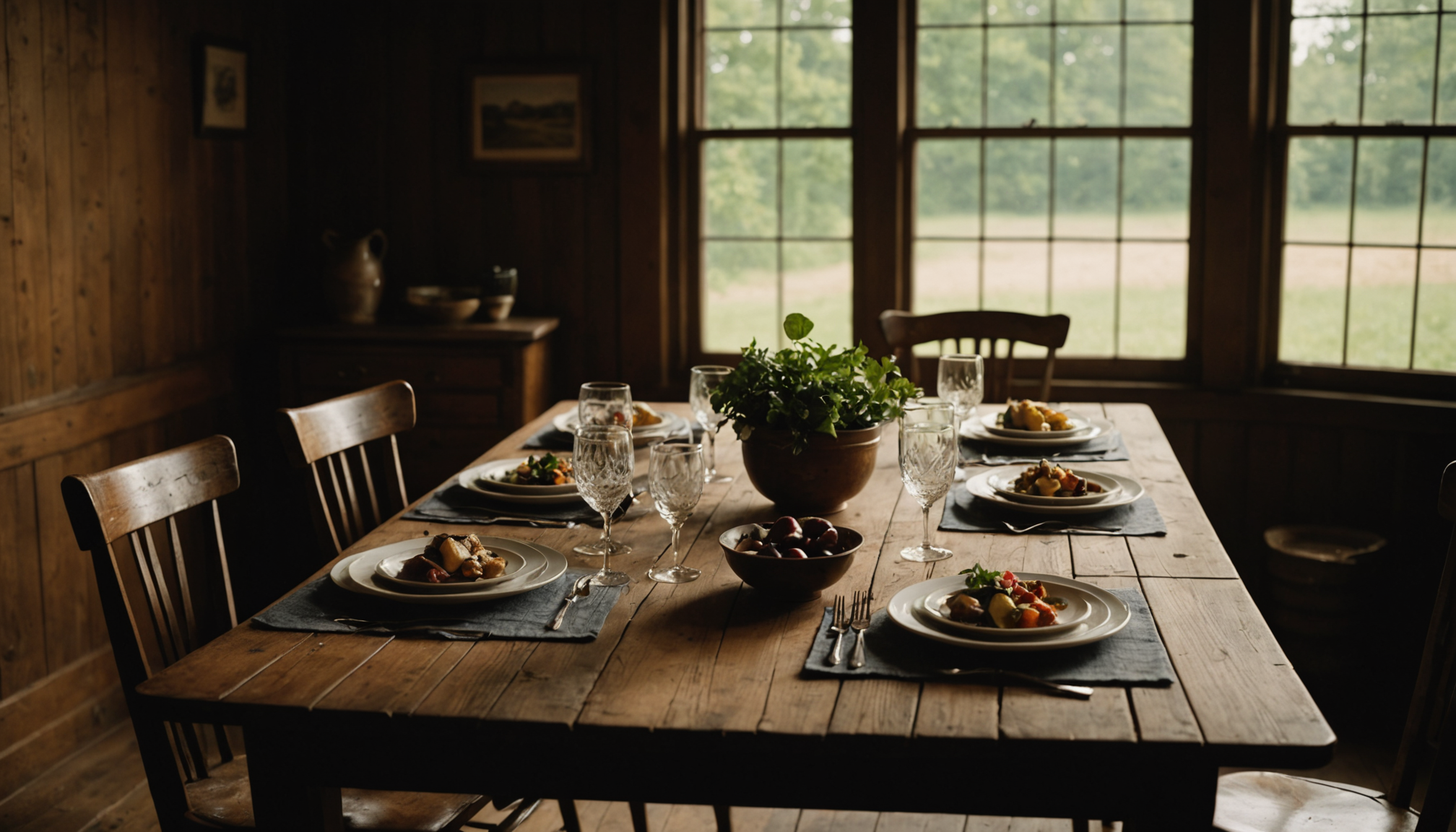
Private Dining Nashville Farm to Table: The Honest Checklist
Most Nashville private dining proposals look beautiful on paper and taste like hotel banquet food on the night. If the private menu your venue sent doesn't share a single ingredient with what the kitchen is actually cooking this season, that's not an accident — it's a policy.
TL;DR
- A private dining menu that never changes regardless of season is a catering operation, not a kitchen cooking for your group.
- Five specific questions — asked before you sign — will tell you immediately whether the kitchen sources and cooks seasonally for private events.
- Price-per-head isn't the number that matters most; what's included in that price (and whether it can flex with the season) tells you far more.
---
Why Most Private Dining Menus Are Frozen in Time
Private dining is, at its core, a logistics problem for most restaurants. A room to fill, a headcount to feed, a timeline to hit. The path of least resistance is a laminated menu of six dishes that the kitchen can execute for thirty people without thinking too hard — dishes that were probably written in 2022 and haven't changed since.
The structural reason for this is simple: banquet-style private menus are designed around consistency and yield, not around what Tennessee farms are harvesting in late October or early March. Bulk-purchased proteins, out-of-season vegetables sourced from a national food-service distributor, sauces made in quantity and held warm. Nothing goes wrong. Nothing stands out.
A typical food-service banquet program might rotate its "seasonal" offerings just twice a year — a spring/summer version and a fall/winter version. That's not seasonality; that's a color palette swap. Real farm-to-table sourcing means the kitchen is talking to farmers weekly and rebuilding dishes around what arrived that morning, not what printed well on a PDF in January.
When you're planning a milestone dinner — a fiftieth birthday, a rehearsal dinner, a team retreat where you actually want people to remember the food — that kind of kitchen-by-the-numbers approach is a real cost, even if it doesn't appear on the invoice.
---
Private Dining Farm to Table: The Menu Red Flags
You can spot a frozen private menu before you ever taste a bite. Watch for these signals when a venue sends over their private dining package:
- No farm or producer credits anywhere on the menu. A kitchen that knows where its food comes from wants to tell you. If the proposal reads "roasted chicken breast with root vegetable medley," ask yourself: which farm? What roots? In what season?
- The same PDF they sent six months ago. Ask the coordinator when the private menu was last updated. If they hesitate or say "it's our standard menu," that's your answer.
- No substitution flexibility. A seasonal kitchen can swap a component because the butternut squash just came in better than the sweet potatoes this week. A banquet kitchen says no substitutions.
- Dishes that require out-of-season produce. If it's February and the proposal includes vine-ripened heirloom tomatoes or fresh corn, that's not locally sourced — it's flown in. Understanding how to evaluate a Nashville farm-to-table dinner before you book any private event is worth fifteen minutes of your time.
- No chef involvement in the conversation. If the only person you've spoken with is a sales coordinator and the chef's name never comes up, the chef likely has no input over your private menu.
Any one of these on its own is a yellow flag. Three or more together and you're looking at a catering operation wearing a farm-to-table label.
---
What a Seasonal Private Dining Farm to Table Menu Actually Looks Like
A private dining menu built around real seasonal sourcing looks noticeably different — and behaves differently — from the moment you first see it.
It's written in the present tense, not in the abstract
"Roasted Wedge Oak Farm sweet potatoes, sourced this week, with house-made sorghum butter and Tennessee pecans" tells you something. "Root vegetable medley with compound butter" tells you nothing.
It has a short window of availability
A kitchen cooking seasonally will often tell you that a specific dish is only available through a certain month. That's not a limitation — that's proof the menu is actually tied to the farm calendar. Knowing that a dish is only on the table in late autumn because the ingredients only exist in late autumn is the whole point.
The tasting menu and the private menu share DNA
This is the clearest test. When a kitchen is genuinely sourcing seasonally, the chef's tasting menu and the private dining menu pull from the same weekly ingredient list. If you've read about what a chef's tasting menu actually reveals about a kitchen, you already know that the tasting menu is the most honest window into how a kitchen actually works. A private menu that looks nothing like it is a private menu the kitchen didn't write.
It builds in a pre-event conversation with the kitchen
A seasonal private dinner for twenty people in 2026 — at a restaurant that's actually doing it right — typically involves at least one phone call or in-person tasting with the chef or sous chef four to six weeks out. That conversation is where dietary restrictions, protein preferences, and any local produce arriving that month get worked into the menu. If a venue skips that step entirely, the food was never going to be written for your group.
---
Questions to Ask Before You Sign the Contract
Bring these five questions to every private dining Nashville farm to table conversation. The answers will sort the kitchens from the catering operations in under ten minutes.
1. "When was this private menu last updated, and what changed?" A kitchen cooking seasonally will have a specific answer. A catering operation will say something vague about "freshening it up."
2. "Which farms are you sourcing from for this time of year, and can you name them on the menu?" Restaurants with real sourcing relationships know their farmers by name. Wedge Oak Farm, Delvin Farms, Bear Creek Farm — these are names that come up in real conversations. Generic "local farms" without specifics is branding language, not a sourcing relationship.
3. "Can we schedule a call with the chef before we finalize the menu?" The answer to this one tells you everything about how much creative ownership the kitchen actually has over your event.
4. "How does the menu change if something isn't available the week of our dinner?" A kitchen that sources seasonally has a clear answer: we substitute with whatever arrived fresh that week and let you know. A banquet kitchen says it won't come up.
5. "Does the private menu share ingredients with your current dinner service?" This is the DNA question from the section above, asked directly. If the two menus are operating on entirely separate supply chains, you're not getting the seasonal kitchen — you're getting a side operation.
---
Private Dining Nashville Farm to Table: The Cost Conversation Nobody Has
Price-per-head for private dining in Nashville in 2026 runs a wide range — a straightforward three-course seated dinner for twenty guests typically falls somewhere between $85 and $175 per person before beverage, depending on the level of sourcing and kitchen involvement. That spread is real, and it matters.
What most hosts don't ask is what's included in the number. A $95 per-head price that covers a frozen banquet menu with national food-service proteins is a more expensive meal than a $140 per-head dinner built around this week's farm delivery, because the lower number is buying convenience and yield management, not food.
The cost of a genuinely seasonal private dinner also includes things that don't show up on the invoice: a chef who rewrites components weekly, a sourcing relationship that requires real-time communication with three or four farms, and a kitchen team that's cooking your dinner the same way they're cooking the regular seasonal dinner menu on a Tuesday night — with the same care and the same ingredients.
Ask every venue you're considering this question: "What percentage of the ingredients for our dinner would come from Tennessee farms?" A round, confident answer — seventy percent, eighty percent — with specific farm names attached is worth more than any price concession.
The other cost nobody mentions: the opportunity cost of a forgettable meal. A milestone dinner that tastes like catered conference food is a thing you can't undo. The people around that table will remember whether the food mattered.
---
If you're ready to plan a private dinner in Nashville where the kitchen is actually cooking for your group — seasonally, from farms we know by name — reach out to the team at Ember & Oak at /contact. Tell us your date, your headcount, and what the occasion means to you, and we'll set up a conversation with our chef to start building the right menu from this season's table.