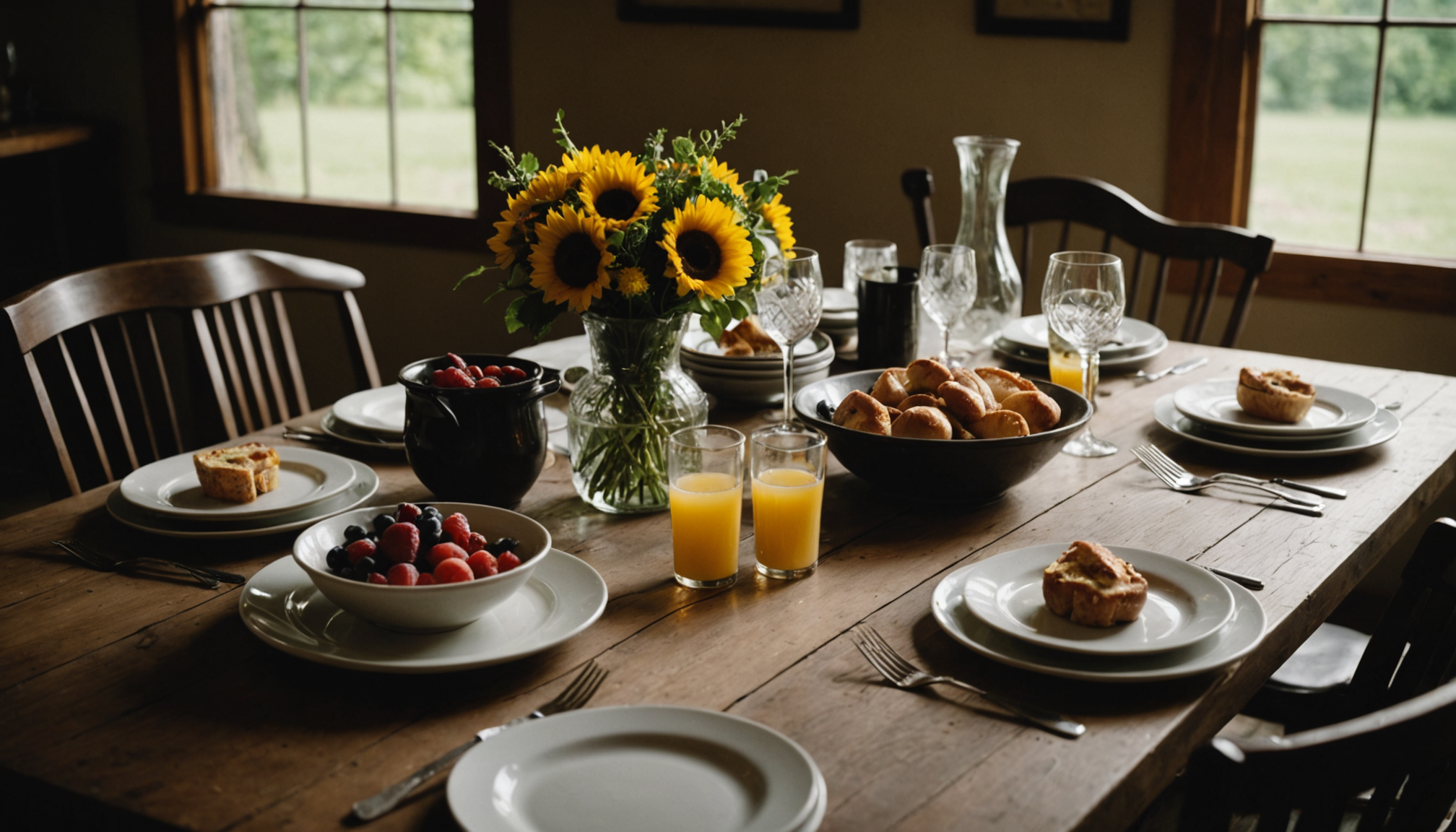
Farm to Table Brunch Nashville: How to Tell Who's Actually Sourcing Locally
Most Nashville brunch menus list a farm name or two. That doesn't mean the eggs came from there this morning.
There's a version of "farm to table" that lives entirely in the typography — a chalkboard font, a county name dropped in the menu description, microgreens as a garnish on the same eggs a restaurant orders from a broad-line distributor every Tuesday. In 2026, that version is everywhere on the East Side. The real thing — a weekend brunch menu that shifts because the Sequatchie Valley strawberries finally came in, or because the Bells Bend kale ran short after a cold snap — looks and tastes genuinely different. This guide will help you tell the two apart before you've ordered a single mimosa.
TL;DR:
- A menu that never changes between March and October is almost never sourcing locally — real seasonal produce doesn't hold still.
- Look for farm names with specific locations (county or town), not just "local farms" — vague sourcing language is the first red flag.
- Ask your server one direct question: "What's different on the menu this week?" A server at a genuinely sourcing restaurant can answer without pausing.
---
What a Real Farm to Table Brunch Menu Reveals
The menu itself is the most honest document a restaurant produces. Spend 60 seconds with it before you sit down, and it tells you most of what you need to know.
A brunch menu built on genuine local sourcing changes — not seasonally in the broad marketing sense, but week to week, sometimes dish to dish. A Tennessee farm running a diversified operation might deliver hen-of-the-woods mushrooms for three consecutive weekends and then go quiet until late fall. When a kitchen is actually working with those deliveries, the menu reflects that rhythm. When it isn't, the menu reads the same in April as it does in September.
What to look for in the first 30 seconds
- Farm names with geography attached — "Bountiful Hollow Farm, Joelton, TN" means something. "Locally sourced eggs" means almost nothing.
- Dishes that sound specific to a moment — "Spring onion frittata with Tennessee ramps" is time-stamped. "Seasonal vegetable hash" could be printed on a laminated card from 2019.
- A short menu — Restaurants sourcing from small Tennessee farms can't offer 22 brunch items and keep them all genuinely local. Eight to twelve dishes, with a few rotating specials, is a far more honest footprint.
The menu's length and specificity together give you a read in under a minute. A 14-item brunch menu where every protein, vegetable, and grain is traced to a named farm is theoretically possible — but genuinely rare. When you see it, notice it. When you see a four-page laminated menu with "farm fresh" in the header, stay skeptical.
This same forensic read applies beyond food. If you want to understand whether a restaurant's sourcing philosophy carries through to the bar, how to read a Nashville cocktail program for local sourcing is worth a look — the bar is usually where the claims go quietest.
---
Saturday Morning Supply Chain: Field to Skillet by 9 AM
Here's a number worth holding onto: a Tennessee farm within 100 miles of Nashville can deliver harvested produce to a restaurant kitchen in under three hours. That window — harvest Thursday or Friday morning, deliver Thursday or Friday afternoon, plate Saturday and Sunday — is the actual supply chain behind a genuine farm to table brunch in Nashville. It is tight, logistically demanding, and completely viable when a kitchen plans around it.
Most don't, because planning around it means menu flexibility that most operations find uncomfortable. You can't print 400 brunch menus for the weekend if you don't know until Friday afternoon that the sweet potato delivery ran light. Restaurants that actually source locally have largely moved to printed daily specials, chalkboard inserts, or QR-linked menus that update without a reprint cost.
The farmers market question
Nashville's Nashville Farmers' Market runs year-round, and several East Side restaurants supplement their direct farm relationships with Saturday morning market runs for whatever's peak that week. If a brunch kitchen is genuinely sourcing, someone on the team either has a standing Thursday delivery relationship with two or three farms, or they showed up at 6:30 AM on Saturday to pick up a flat of dry-farmed tomatoes before service. Both are real. Both leave traces on the plate.
When the sourcing is genuine, the kitchen usually talks about it — not in marketing language, but in specific terms. "We got a great delivery of Bonnie Blue Farm strawberries Thursday, so the pastry chef built the French toast special around those" is a sentence a real line cook says. "We use the freshest local ingredients" is a sentence that lives on a website.
---
Farm to Table Brunch Nashville: Red Flags on Any Menu
Some signals are subtle. These aren't.
- "Market price" on items that never actually change — If the shrimp and grits have been $18 since last spring and the description hasn't moved, that dish isn't tracking a local supply chain.
- Imported proteins paired with "local" vegetables — There's nothing wrong with responsibly sourced seafood or proteins from outside Tennessee. But a menu that claims to be farm-to-table while running industrially farmed proteins is using the label selectively.
- Farm names you can't verify in 30 seconds — Pull up the farm name on your phone. If it has no web presence, no Instagram, no mention in any Nashville food coverage, treat the citation skeptically. Tennessee's most active farm-to-restaurant suppliers — Delvin Farms, Bells Bend Farms, Bonnie Blue Farm, Bear Creek Farm — are findable.
- A brunch menu identical to the dinner menu's starters — Restaurants that genuinely source for brunch treat Saturday morning as its own culinary moment, not a repackaging of Friday night leftovers with an egg on top.
- No seasonal specials, ever — Even in January, Tennessee has storage crops, greenhouse greens, and cold-hardy root vegetables worth featuring. A kitchen with real farm relationships always has something seasonal to say.
For a broader framework — one that applies to dinner and tasting menus too — the guide on spotting a genuine farm-to-table restaurant in Nashville covers the full picture in about five minutes.
---
Seasonal Brunch Items Worth Rearranging Your Weekend For
This is the part that makes genuine farm to table brunch in Nashville worth the search. When the sourcing is real, the food doesn't taste like anything you've had at a hotel buffet or a franchise breakfast chain — because it literally isn't the same ingredients.
A few things worth watching for across Tennessee's seasons in 2026:
Spring (March–May)
Ramps from the Smoky Mountain foothills, morel mushrooms from Middle Tennessee hardwood forests, early asparagus, spring peas, strawberries from Robertson County farms. A brunch kitchen with real spring access builds specials around these the week they arrive — not a month later.
Summer (June–August)
Dry-farmed tomatoes, Jimmy Nardello peppers, summer squash, sweet corn, peaches from Grainger County. This is the most abundant window for East Tennessee and Middle Tennessee farms, and a brunch menu in late July should read like a produce stand with eggs.
Fall (September–November)
Sorghum, sweet potatoes, winter squash, persimmons, muscadine grapes, late-season greens. This is when Tennessee kitchens with pantry instincts — house-cured, house-fermented, house-preserved — really differentiate themselves.
Winter (December–February)
Storage roots, greenhouse arugula, dried beans, pickled and fermented vegetables from the fall harvest. A genuinely sourcing kitchen doesn't go dormant; it shifts to what the land is actually offering.
When a brunch plate carries one of these ingredients by name, in the right month, it's a strong indicator the kitchen is paying attention to more than aesthetics.
---
Questions to Ask Your Server Before You Order
A server at a restaurant that genuinely sources locally can answer these questions without a script. A server at a restaurant using the aesthetic can't.
Five questions that separate real from performed
1. "What came in from the farm this week?" — Not "do you source locally" — that gets a yes from everyone. Ask what specifically arrived. A real answer sounds like: "We got a delivery from Bells Bend Thursday — they brought us a ton of watermelon radishes, so the kitchen put together a new grain bowl." A scripted answer sounds like: "We source all our vegetables locally."
2. "Has the menu changed at all in the last few weeks?" — If the answer is no, and it's been more than six weeks, the kitchen isn't responding to seasonal supply.
3. "Where do your eggs come from?" — Eggs are the single easiest ingredient to source locally in Tennessee, and they make a visible difference in a dish. If a brunch restaurant can't name an egg source, the local sourcing claims deserve more scrutiny.
4. "What's the kitchen most excited about right now?" — Good servers at ingredient-forward restaurants carry genuine enthusiasm for whatever just arrived. This question surfaces that enthusiasm — or the absence of it.
5. "Is there anything on the menu today that won't be here next weekend?" — Limited-availability specials built around a finite farm delivery are the clearest mark of real seasonal cooking. If everything on the menu will definitely be there next month, the kitchen is working from a standing order, not a farm relationship.
These questions take about 90 seconds, and they work on any East Side Nashville brunch spot. A kitchen that takes sourcing seriously welcomes them. And if you want to see what a seasonal brunch program actually looks like when those answers are built into the food itself — from the eggs to the cocktail garnish — how Ember & Oak approaches its seasonal menus gives you a concrete frame of reference.
---
Ember & Oak's weekend brunch menu is built around what Tennessee farms deliver Thursday and Friday — which means it reads a little differently every week, and a few things sell out before noon. If you'd like to see what's on this weekend before you make the drive to the East Side, book your table at /contact and we'll hold a spot for you. Reserve early — the good eggs go fast.
<<>>