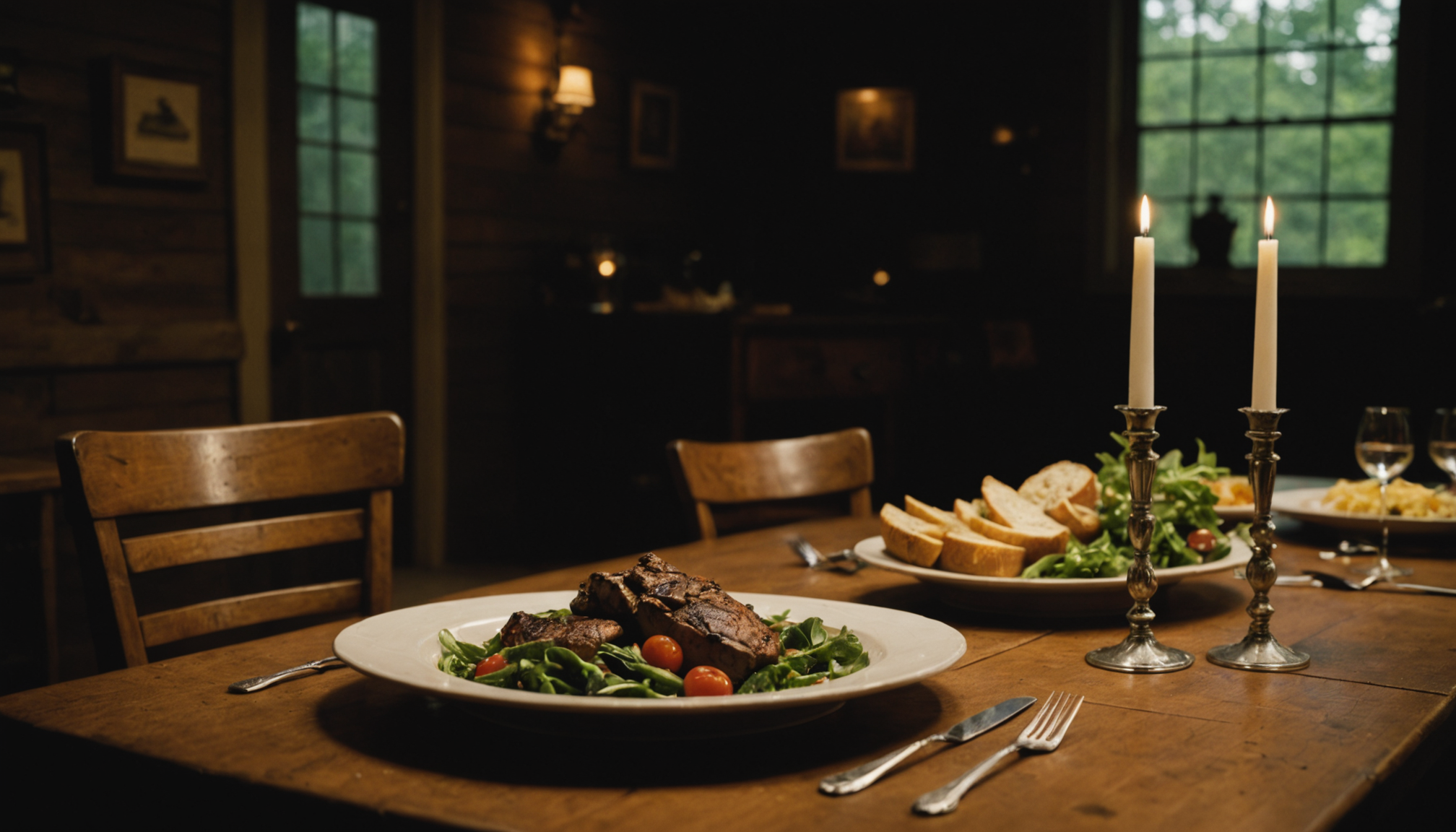
Nashville Farm to Table Dinner: How to Tell Who's Actually Sourcing Locally
Roughly half the upscale dinner menus in Nashville use the phrase "farm to table" — and fewer than a handful can name the farmer who grew last night's tomatoes. That gap between marketing and reality is exactly what this post is designed to close.
TL;DR — three things to take with you:
- A restaurant printing "locally sourced" on its menu without naming farms is using the phrase as décor, not as a sourcing standard.
- Three specific questions asked before you book will expose whether a Nashville farm to table dinner is real or styled within 60 seconds.
- Menu language — not ambiance — is the fastest, most reliable signal of genuine Tennessee sourcing relationships.
---
Why 'Farm to Table' Costs More — and When a Nashville Farm to Table Dinner Shouldn't
A proper farm-to-table dinner costs more to prepare than a conventional one. That's not marketing — it's math. Small Tennessee farms can't offer the volume discounts that a broadline distributor like Sysco runs, so the per-pound cost of dry-farmed Cherokee Purple tomatoes from Whites Creek is genuinely higher than commodity produce from a regional warehouse.
Here's where the premium is legitimate: a kitchen buying from Smith Family Farms in Leiper's Fork and rotating the menu every two to three weeks to match what's actually ripening will spend more on sourcing, prep labor, and menu printing than a restaurant that locks in the same twelve dishes for six months. That operational reality justifies the price difference.
Where it stops being legitimate: when a restaurant charges $34 for a chicken entrée, uses the phrase "locally inspired," and the chicken came from a national poultry processor. In 2026, that gap between menu promise and plate reality is still remarkably common in Nashville's upscale dining corridor. You should expect specificity for your dollar — a farm name, a county, a grower relationship that someone at the restaurant can actually explain.
If a server hesitates when you ask where the greens come from, the premium you're paying is funding the aesthetic, not the agriculture.
---
Three Questions That Expose a Fake Nashville Farm to Table Dinner
You don't need to interrogate anyone. Ask these three questions before you sit down — by phone, on OpenTable's messaging feature, or once you're seated — and the answers will do the work.
1. "Which farms are you sourcing from this week?"
A restaurant with real grower relationships answers this without thinking. "We just got the last of the Delvin Farms field peas and we're running them through Saturday" is a specific answer. "We source from local farms in the Middle Tennessee area" is a press release.
2. "Does the menu change based on what the farm has available, or is it set seasonally?"
Real sourcing means the kitchen bends to the farm's calendar, not the other way around. A genuinely sourced kitchen will tell you the menu shifted midweek because the squash came in early or the dry spell cut the herb yield. A styled farm-to-table restaurant will describe "seasonal rotations" that happen to align perfectly with quarterly marketing pushes.
3. "Can you tell me about one ingredient on tonight's menu and where it came from?"
This is the easiest question for an honest restaurant to answer and the hardest for a dishonest one. One specific story — a specific farm, a specific grower, a specific week — is worth more than a paragraph of general sourcing philosophy on the menu cover.
If you're still unsure after asking, it's worth reading how to tell whether a seasonal dinner menu is actually fresh — the signals overlap in useful ways.
---
What a Real Sourcing Relationship Looks Like in Tennessee
Tennessee's agricultural landscape is specific and genuinely rich: the Cumberland Plateau, the Nashville Basin, the Highland Rim. Each zone produces different things at different intervals, and a restaurant with real farm relationships will reflect that geography on its plates.
Real sourcing relationships in Tennessee typically involve:
- Pre-season planning calls between the chef and the grower — sometimes as early as February — to decide what gets planted based on what the kitchen needs by May.
- Weekly delivery schedules from farms within roughly 60–90 miles of Nashville. That window covers Williamson County, Wilson County, Robertson County, and parts of the Highland Rim.
- Named farmers in staff training. Line cooks and servers at genuinely sourced restaurants can tell you something about the person who grew the food — not because they've memorized a script, but because that grower's name comes up in pre-shift meetings.
- Honest unavailability. When a drought hits Middle Tennessee in August — which happens most years — a real farm-to-table kitchen runs short on specific items and says so. If the same menu runs flawlessly through a dry summer with every item fully stocked, the supply chain is not what the menu implies.
At Ember & Oak, we plan our seasonal dinner menu around what our Tennessee growers tell us is coming — not the other way around. When the Bells Bend kale runs out, it comes off the board. That constraint is the point.
---
How Menu Language Tells You the Truth Before You Order
You can read a menu the way a sommelier reads a wine label — with attention to what's specific and what's vague. Here's the key distinction.
Language that signals real sourcing:
- Farm names with locations: "Ridgeview Farm, Sumner County"
- Specific cultivar or variety names: "Dragon Tongue beans", "Jimmy Nardello peppers"
- Honest seasonal qualifiers: "available while the harvest holds" or "through mid-October"
- Simple preparations that let the ingredient lead: roasted, raw, pickled, cured — techniques that only work when the ingredient is actually good enough to carry the dish
Language that signals marketing:
- "Locally inspired" — inspired by what, exactly?
- "Seasonally curated selections" with no dates or farm names
- Long flavor-adjective strings: "sun-kissed heirloom tomatoes bursting with garden-fresh flavor" — this language exists to distract from the fact that those tomatoes shipped from a distribution center in Murfreesboro
- Every ingredient described as "artisan," "heritage," or "hand-crafted" simultaneously
This same scrutiny applies to what "clean eating" labels actually mean on a Nashville menu — vague wellness language and vague sourcing language share the same root problem.
---
A Side-by-Side: What $100 Buys at a Sourced Dinner vs. a Styled One
Assume a dinner for one: appetizer, entrée, dessert, one craft cocktail. In Nashville's upscale dining market in 2026, that runs $95–$130 before tip.
| | Genuinely Sourced Dinner | Styled Farm-to-Table Dinner |
|---|---|---|
| Menu | Changes 2–4 times per month based on farm availability | Changes seasonally (quarterly), sometimes less |
| Farm credits | Named farms with counties on the printed menu | "Local farms" or "regional partners" |
| Staff knowledge | Server can name the farm and explain why that item is on tonight | Server references "our sourcing philosophy" |
| Ingredient quality | Produce harvested 24–72 hours before service | Produce from a distributor, possibly 5–10 days post-harvest |
| Flavor | Dry-farmed, ripe-at-pick vegetables taste structurally different — more concentrated, less watery | Nutritionally fine, visually styled, flavor gap is subtle but real |
| What you're paying for | The grower's labor, the chef's relationship, the shortened supply chain | The dining room, the branding, the plating technique |
That last row is the one that matters. Both dinners can be beautiful. Only one of them required the kitchen to drive to a farm at 6am on Wednesday.
For a special occasion where the stakes are higher — an anniversary, a birthday, a first visit from out of town — it's worth going deeper than the menu. The questions in our guide to Nashville anniversary dinners apply directly here.
---
When you're ready to sit down at a table where every ingredient has a county attached to it, reserve your spot at Ember & Oak — book directly through our website at /contact and we'll confirm your table for Thursday through Sunday, 5pm onward. If you want to know what's on the board this week before you come in, just ask when you book. We'll tell you exactly what came in from the farm, and who grew it.
<<>>