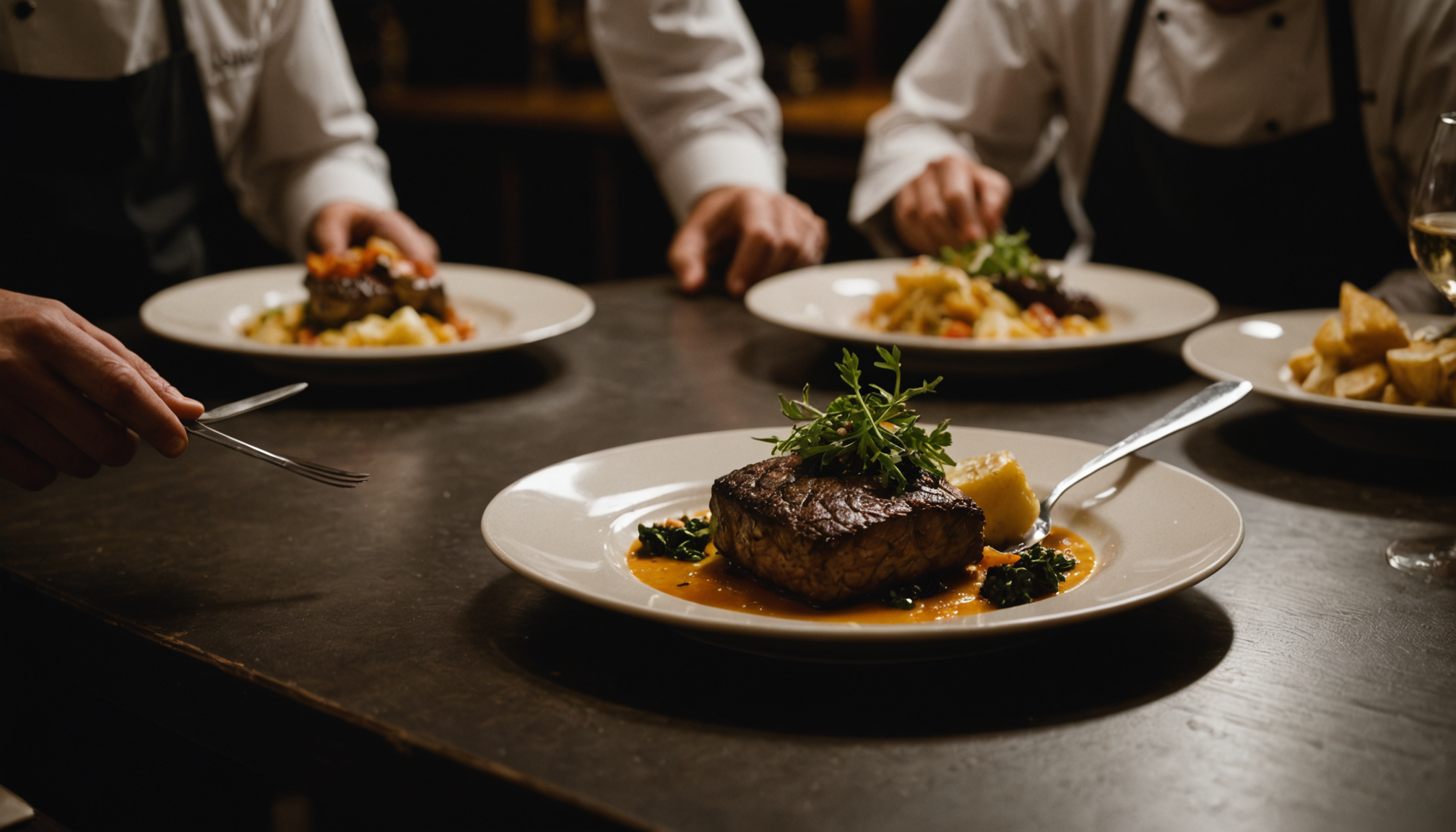
Is a Chef's Tasting Menu Worth It? What Nashville Diners Should Know
A chef's tasting menu is the one format where a kitchen can't hide behind a crowded à la carte list — every course is a declaration. Before you decide whether one is right for your next special occasion, here's exactly what to look for, what to ask, and when to walk away.
TL;DR
- A chef's tasting menu forces the kitchen to show its sourcing hand course by course — making it the most transparent way to eat farm-to-table in Nashville.
- À la carte menus can quietly paper over supply-chain shortcuts; a tasting menu structure leaves almost nowhere to hide.
- Three targeted questions — asked before you book — will tell you whether a Nashville tasting menu reflects real Tennessee farm relationships or just beautiful plating.
---
What a Chef's Tasting Menu Actually Reveals About a Kitchen
Order à la carte and you control the story. You pick the dishes you recognize, skip the ones that sound unfamiliar, and leave having eaten well but learned very little about how the kitchen actually operates. A chef's tasting menu flips that dynamic entirely — it hands the narrative to the kitchen, and that narrative is only as good as the relationships the chef has built outside the restaurant walls.
When a kitchen commits to a five, seven, or nine-course tasting menu, it's committing to a living document. Each menu reflects what a farmer called about on Tuesday morning, what came off a vine in Robertson County over the weekend, what the weather has been doing to the sorghum crop. In 2026, with Tennessee experiencing its warmest early spring on record, what's "in season" has shifted by as much as two to three weeks compared to five years ago — and a well-run chef's tasting menu in Nashville will reflect that shift in real time, course by course.
That specificity is the tell. Look at how the kitchen describes its proteins, its grains, its alliums. If a menu reads "Calfkiller Valley rabbit, wood sorrel, smoked butter" rather than "roasted rabbit with herb butter," the chef is giving you the sourcing data directly on the plate. Every named farm, every variety of heirloom corn, every foraged green is a traceable link in a supply chain the kitchen is proud enough to put in writing.
At Ember & Oak, our chef's tasting menu runs four to six courses and rotates with each week's farm deliveries — sometimes mid-week when something extraordinary comes in. That's not a marketing decision. It's what honest cooking looks like.
---
Why À la Carte Menus Let Restaurants Hide Shortcuts
This isn't an indictment of every à la carte restaurant in Nashville — it's a structural observation. A menu with 22 items across four categories requires extraordinary supply chain discipline to source every component locally and seasonally. Most kitchens can't sustain that, so they triangulate: two or three anchor proteins they source well, and the rest filled in with a broadline distributor.
There's nothing inherently wrong with that trade-off, but it means a diner choosing between the salmon and the duck has no reliable way to know which one came from a farm 40 miles away and which one arrived frozen on a Tuesday truck. The menu language often doesn't distinguish. Prettier words — "line-caught," "heritage-breed," "artisan" — have become decoration rather than provenance.
A tasting menu, by contrast, structures the entire meal around what the kitchen can actually vouch for right now. If a farm's tomato crop runs short, that course disappears or transforms. If the late-summer okra harvest is exceptional, it earns a course it wouldn't have gotten in a slower growing year. The constraint is the integrity. As you're learning to read a restaurant's farm sourcing claims, you'll notice that tasting menus tend to be where the most legible sourcing language lives — because the format demands it.
---
How Nashville's Tasting Menus Reflect Tennessee's Growing Calendar
Tennessee's agricultural calendar is genuinely unusual. The state sits in a climate band that delivers ramps in March, strawberries by late April, three distinct squash windows across summer, muscadine grapes in August, and hard-neck garlic through the fall. A Nashville chef's tasting menu built around that calendar eats nothing like a comparable menu in Charleston or Chicago — and it shouldn't.
Here's a rough sketch of what an honest Nashville tasting menu reveals across the year:
- March–April: Ramps, morels, early lettuces, spring peas, young goat cheese from farms coming out of winter
- May–June: Strawberries, snap peas, new potatoes, early squash blossoms, radishes
- July–August: Heirloom tomatoes, Jimmy Nardello peppers, corn, okra, peaches, blackberries
- September–October: Muscadines, hard squash, sweet potatoes, late peppers, persimmons beginning
- November–February: Root vegetables, dried beans, preserved goods, winter greens, heritage pork
If you sit down to a Nashville tasting menu in November and the fourth course features fresh tomatoes described without any preservation context — "roasted heirloom tomato" with no mention of fermentation, canning, or greenhouse sourcing — that's a flag. Tomato season in Middle Tennessee closes hard by mid-October. Understanding why Tennessee's seasonal calendar matters so much helps you read those signals clearly when you're at the table.
A seven-course tasting menu that genuinely tracks Tennessee's calendar will feel slightly different every six to eight weeks — because the land it reflects is changing every six to eight weeks.
---
Questions to Ask Before Booking a Chef's Tasting Menu
Most Nashville restaurants with a serious tasting menu program are happy to answer sourcing questions before you book — in fact, a kitchen that deflects those questions politely is telling you something. Here are three specific questions worth asking:
1. Which farms are you sourcing from right now?
You're not looking for an exhaustive list. You're looking for proper nouns — actual farm names, actual counties. "We work with local farms" is not an answer. "We're getting corn from Bells Bend Organic and peppers from a small grower in Sumner County" is.
2. How far in advance is the tasting menu set?
A menu locked in two weeks ahead and rarely adjusted is a produced event, not a kitchen responding to its farmers. A menu that's confirmed three to four days out — with a note that one or two courses may shift based on what arrives — reflects genuine farm dependency. That flexibility is a feature, not an inconvenience.
3. Can you accommodate dietary restrictions without collapsing the sourcing integrity?
This question reveals how the kitchen thinks. A strong tasting menu program has enough depth in its farm relationships to substitute seasonal components rather than defaulting to a plain protein with no story. If the answer is "we'll just pull that course and replace it with a salad," the kitchen likely doesn't have the pantry depth to back up its sourcing claims. Knowing how to spot genuine farm-to-table practices in Nashville makes these conversations easier to navigate from the guest's side of the table.
---
When the Chef's Tasting Menu Is Worth It (and When It Isn't)
The honest answer is that a chef's tasting menu is worth it when you're eating at a kitchen where the format serves a real purpose — not when it's a premium price tag wrapped around a static six-course parade that hasn't changed since March.
When it's worth it:
- The menu changes at least every three to four weeks, and the kitchen can explain why
- Courses are named with farm-level specificity, not just category-level adjectives
- The price, typically in the $85–$145 per person range for a serious Nashville tasting menu in 2026 (excluding beverages), reflects labor-intensive preparation rather than inflated margin on ingredients you could buy at a grocery store
- The kitchen offers a craft cocktail pairing or a beverage program built with the same sourcing philosophy — house-made bitters, foraged garnishes, Tennessee spirits
- You're celebrating something that warrants full kitchen attention across a table for two to eight people
When to order à la carte instead:
- You have a very specific dish in mind and want to order around it
- You're dining with guests who have significant dietary restrictions and you haven't had a pre-booking conversation with the kitchen
- The tasting menu is described as "inspired by" seasonal ingredients rather than built from them — that one word distinction matters
A chef's tasting menu at a restaurant with real farm relationships isn't a luxury product pitched at special occasions. It's the most direct way to understand what Tennessee's land is doing right now — course by course, farm by farm, season by season.
---
If you're ready to sit down to a tasting menu that changes because the farms change, book your table at Ember & Oak at /contact — our current chef's tasting menu is set Thursday through Saturday evenings, and our kitchen is glad to walk you through exactly where every course came from before you take your first bite.