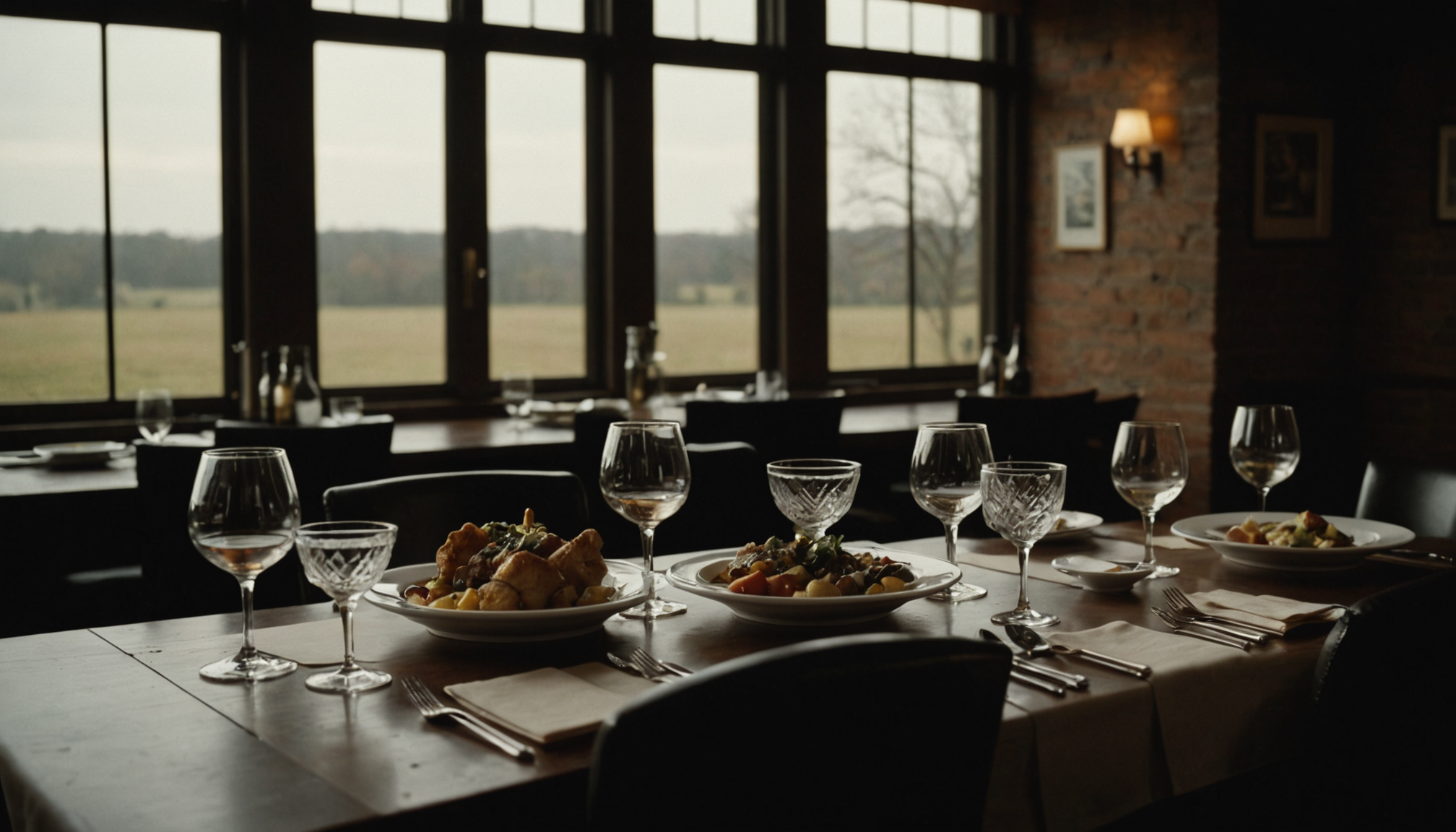
Private Dining Nashville: Why Seasonal Menus Beat Banquet Sheets
Most Nashville venues will hand you a laminated private dining menu that hasn't changed since the restaurant opened. That's not a menu — it's a liability shield.
TL;DR:
- A fixed banquet sheet prioritizes kitchen convenience, not the best ingredients available that week — and your guests can taste the difference.
- True farm-to-table private dining in Nashville means the chef shapes your menu around what Tennessee farms are harvesting right now, not what stores well in a walk-in freezer.
- Use the checklist in this post to ask the right questions before you book, so you're not paying event-venue prices for a reheated banquet experience.
---
---
Why Banquet Menus Are the Enemy of Great Private Dining
Walk into most private event spaces in Nashville and the conversation starts the same way: chicken, salmon, or the vegetarian pasta. The menu was written once, approved by a corporate committee, and has been reprinted on card stock ever since. It exists because it's predictable — predictable for the kitchen, predictable for the purchasing manager, and deeply predictable for the people eating it.
The problem isn't that banquet menus are bad food. The problem is that they're designed to survive the calendar, not celebrate it. A dish engineered for a February corporate dinner in a downtown hotel ballroom is not the same as food made to honor a June rehearsal dinner — and yet, served from the same laminated page, it often is exactly the same.
Here's what that trade-off actually costs you: in a typical 2026 catered private dinner for 20 guests in Nashville, you might spend anywhere from $1,800 to $4,000 on food and service. That's a serious investment to spend on a meal that could have been served at any hotel in any city on any Tuesday.
The alternative isn't complicated — it's just less common. A kitchen that builds your private menu around what's real and ready right now produces food with a fundamentally different character. The cream is richer, the produce hasn't been in cold storage for three weeks, and the chef is actually interested in what's coming out of the kitchen. That interest travels to your plate.
---
How Seasonal Sourcing Elevates a Private Dining Nashville Experience
Tennessee grows a remarkable amount of food across a genuinely varied growing season. By late spring, you're seeing field peas, strawberries, and spring onions. By August, Cherokee Purple tomatoes and sweet corn. By October, hard squash, turnip greens, and late-season peppers. A kitchen that tracks those cycles and builds relationships with specific farms — say, a small plot outside Franklin or a family operation in the Cumberland Plateau — can hand you a dinner that is tied to a place and a moment in time.
That specificity is what elevates a private dinner from "a nice meal" to something guests mention six months later.
The difference shows up most clearly in proteins and produce. A kitchen sourcing locally might lock in heritage pork from a Sumner County farm that delivers on Thursdays — which means your Friday rehearsal dinner gets the first cut of that week's delivery, not the last. Compare that to a banquet sheet built around commodity chicken breast that arrived on a truck from a distribution center three states away.
If you've already spent time learning how to spot a genuinely farm-to-table restaurant in Nashville, you know that the sourcing conversation is the fastest way to separate real from marketing. The same lens applies to private dining: ask where the proteins come from, ask how far in advance the menu is finalized, and ask what changed on the menu in the last 30 days.
Seasonal sourcing also means the menu you confirm two weeks before your event might be refined the week of — not because the kitchen is disorganized, but because the tomatoes came in better than expected and the chef wants to use them while they're perfect. That kind of responsiveness is a feature, not a scheduling problem.
---
Questions to Ask Before Booking Any Farm to Table Private Dinner
Most people walk into a private dining inquiry asking about price per head and whether the room has a projector. Those are fine questions. But if you want to evaluate whether a Nashville restaurant can actually deliver a seasonal, farm-driven private event, you need a different set of questions.
The sourcing questions
- "Which farms do you buy from right now, and how often do deliveries come in?" A kitchen with real farm relationships can name names — not just "local farms" as a phrase.
- "How far in advance do you finalize a private menu, and what happens if a key ingredient doesn't come in?" The answer tells you how flexible and ingredient-led the kitchen actually is.
- "Can you show me what changed on your seasonal dinner menu in the last four to six weeks?" If nothing has changed, seasonal sourcing may be a claim more than a practice.
The customization questions
- "Will we work directly with the chef on the menu, or is this a modified version of a standing banquet sheet?" The two are very different things.
- "Can you accommodate dietary restrictions within a seasonal framework — not just by pulling dishes off the menu, but by building alternatives?" A kitchen that knows its ingredients can substitute thoughtfully. A banquet kitchen swaps in the vegetarian pasta.
The logistics questions
- "What does your private dining room hold, and is it a fully private space or a sectioned-off area of the main dining room?" For a milestone dinner or rehearsal dinner, a true private room matters.
- "Do you offer a craft cocktail pairing or welcome drinks built to match the menu's seasonal profile?" This tells you whether the beverage program is integrated or an afterthought.
---
What a Custom Menu Collaboration Actually Looks Like
A real custom menu for a private dinner isn't a 90-minute meeting with a binder of options. It's a conversation that starts with the occasion — who's there, what you're celebrating, whether there's a guest with a walnut allergy or a grandmother who won't eat raw fish — and then moves to what the season is offering.
At Ember & Oak, a private dinner menu typically takes shape two to three weeks before the event, with a follow-up conversation in the final week once we've confirmed that week's farm deliveries. That's not imprecision — that's the difference between a menu written to photograph well on a PDF and a menu written to taste right on the night.
The collaboration usually covers:
1. The occasion and guest count — a rehearsal dinner for 24 has different energy than a corporate dinner for 12.
2. Flavor preferences and non-negotiables — whether the guest of honor loves wood-fired flavors or the table is half vegetarian.
3. The seasonal arc — which Tennessee ingredients are at peak, and how they can build a coherent progression from first course to dessert.
4. Craft cocktail program integration — welcome drinks, a paired cocktail for a signature course, or a tableside mocktail using house-made syrups and foraged garnishes.
For those curious how this kind of menu-building compares to a longer tasting format, our post on whether a chef's tasting menu is worth the investment covers that structure in detail — and a lot of the same philosophy applies to a well-built private dinner.
---
Private Dining Nashville: Red Flags That Signal a Generic Experience
You can identify a banquet-style private dining experience before you ever set foot in the room. Here's what to watch for in 2026 when you're comparing Nashville options:
- A PDF menu that lists proteins with no sourcing detail. "Grilled chicken breast" tells you nothing. "Heritage pork from Southall Farm, cast iron-finished with spring onion butter" tells you something real.
- No mention of seasonal adjustment. If the menu you're quoted in April is identical to the menu listed on the website from January, the kitchen isn't tracking the season — it's working from a standing inventory.
- A beverage list that reads like a bar order form. House red, house white, a beer list, and a whiskey shelf. If there's no craft cocktail program with seasonal or house-made elements, the beverage program was built for volume, not for the table.
- A private dining coordinator who can't tell you which farms the restaurant sources from. The front-of-house team at a genuinely farm-driven restaurant knows the farm names — because those names appear on the menu and come up in pre-service conversation every week.
- A room that doesn't feel like the restaurant. If the private dining room looks like a corporate conference space that happens to be attached to the kitchen, that's usually a signal about which direction the kitchen faces.
The same instincts you'd apply to evaluating any restaurant's sourcing claims — checking whether the farm's story is actually readable on the menu — apply here. A private dinner should feel more connected to the kitchen's identity, not less.
---
You've put real thought into this event. The people at that table matter to you — whether it's a rehearsal dinner, a milestone birthday, or a team dinner that's meant to feel like something other than a team dinner. That occasion deserves food that was planned for it, not food that was already on a spreadsheet.
If you're ready to talk through what a seasonal private dinner could look like for your group, reach out to us at Ember & Oak through our contact page and tell us your date, your guest count, and the occasion. We'll set up a conversation with the chef directly — no PDFs, no banquet binders.
<<>>