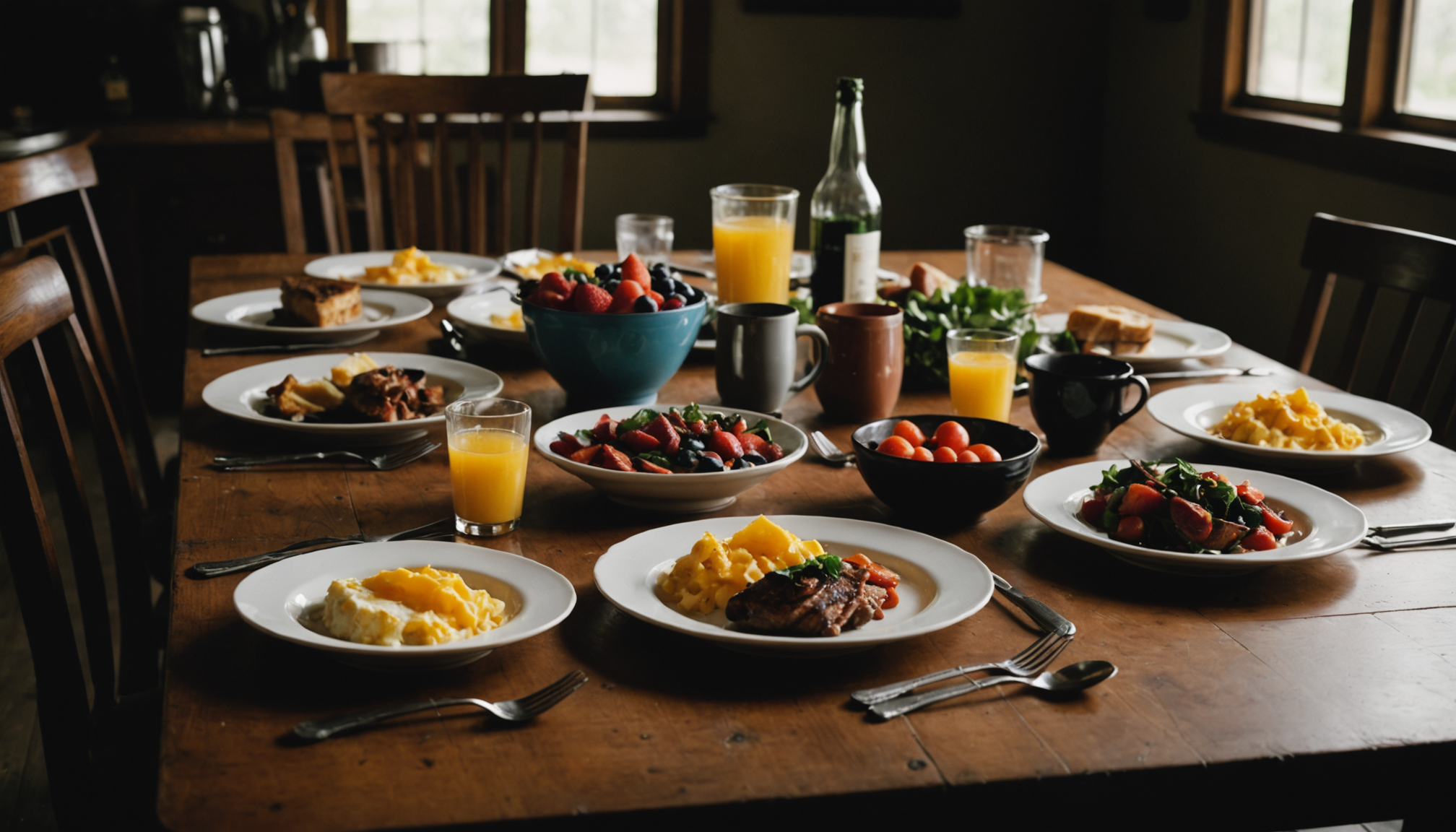
Nashville Weekend Brunch Farm to Table: What's Real vs. Staged
Half the brunch menus on Nashville's East Side claim "farm to table." Fewer than half of those kitchens could tell you the name of the farm that laid their eggs this morning.
TL;DR
- A genuine farm-to-table brunch menu changes week to week — if the menu is identical in January and July, the ingredients aren't coming from a Tennessee field.
- Three quick questions at any Nashville brunch spot will tell you within sixty seconds whether the sourcing is real or decorative.
- Knowing what to look for — specific farm names, rotating specials, house-made components — means you'll stop paying a premium for reheated Sysco and start spending it on plates worth the wait.
---
Why Most Nashville Brunches Are Cosplaying Farm to Table
Walk into almost any East Side Nashville brunch spot on a Saturday morning in 2026 and you'll see the same signifiers: exposed brick, a chalkboard wall, maybe a jar of pickles on the table. The menu uses words like "artisan," "curated," and "locally inspired." Then you flip it over and find avocado toast with a factory egg, pancakes dusted with powdered sugar from a fifty-pound commercial bag, and a chicken biscuit sourced from God knows which industrial processor.
This isn't an accident. It's a calculated aesthetic — and it costs a kitchen almost nothing to maintain. A $14 avocado toast with a Sysco egg and a California avocado has the same margin as one made with a just-harvested Shelby County egg and a house-cultured butter. The difference is whether the kitchen cares enough to build those sourcing relationships, which takes real time and real money.
The honest truth? Most restaurants in Nashville spend roughly 28–32% of revenue on food costs, and cutting corners on sourcing is one of the easiest ways to protect that number. The ones actually buying from Tennessee farms are often paying a premium per unit — and those costs show up on the menu in the right ways: a slightly shorter list of options, a weekend special that changes because the harvest changed, a biscuit recipe that shifts when the local mill gets a new wheat variety in.
The visual tells are real: a genuine farm-to-table kitchen looks a little less uniform. The eggs vary slightly in size. The biscuits aren't identical circles. The greens on your plate aren't the same bagged spring mix you'd find at a grocery store. That inconsistency is the point.
---
What a Seasonal Weekend Brunch Farm to Table Menu Actually Looks Like
A real seasonal brunch menu in Nashville right now — late spring into summer 2026 — should be leaning on Tennessee strawberries, early field tomatoes, summer squash, and fresh shell beans. If you're looking at a menu in February and it has the same ripe tomato frittata that was on the menu in August, something is off.
Here's what genuine seasonal rotation actually looks like in practice:
- Egg dishes rotate protein and vegetable components every 2–4 weeks based on what farms are delivering that week.
- Biscuits and breads use flour from Tennessee mills (Muddy Pond Sorghum and Sunrise Mills are two suppliers active in Middle Tennessee) and may swap in different grain blends as harvests shift.
- Fruit on the menu is actually local fruit — meaning strawberries in May and June, peaches in July and August, persimmons and apples in fall, not a year-round garnish of out-of-season blueberries from Chile.
- Proteins come with a provenance note — a farm name, a county, a relationship the kitchen can describe out loud.
At Ember & Oak, our weekend brunch menu is built around what arrives from our farm partners Thursday and Friday each week. That means the frittata filling this Saturday is not the same as it was last Saturday, and the kitchen team knows exactly where every component came from before a plate leaves the pass.
The same sourcing rigor we apply to the seasonal dinner menu carries directly into weekend brunch — because the belief doesn't change based on the daypart. If you want to understand how that philosophy extends to what's in your glass, our guide to local craft cocktail ingredients in Nashville walks through how the bar program applies the same standard.
---
Three Questions That Expose a Generic Brunch Kitchen
You don't need to interrogate your server. Three low-key questions will tell you everything.
1. "Which farm do your eggs come from?"
This is the fastest signal available. A kitchen with real sourcing relationships answers this immediately and specifically — a farm name, a county, maybe a quick note about the breed of hen or how the eggs are collected. A kitchen running commodity eggs either doesn't know, gives you a vague "local farms" non-answer, or pivots to something else entirely.
2. "What's on the menu this week that wasn't on last week?"
Any restaurant doing genuine seasonal work has an honest answer here. "We just got the first Tennessee strawberries in, so the jam on the biscuit changed" is a real answer. "Oh, our menu doesn't really change" is a red flag wrapped in a chalkboard frame.
3. "What's in the house-made [component] — the hot sauce, the jam, the biscuit mix?"
House-made components are one of the clearest indicators of kitchen investment. A team that makes its own preserves, fermented hot sauce, or cultured butter from local cream has a supply chain worth asking about. A team that opens a commercial jar of Heinz in the back isn't running a farm-to-table kitchen — they're running a diner with better lighting.
---
Farm to Table Brunch Items Worth Paying More For
Not every premium brunch item earns its price. Some are worth it; some are margin theater. Here's the honest breakdown of what justifies spending more on a Nashville weekend brunch:
Worth the premium:
- Eggs from a named Tennessee farm — pasture-raised eggs from a small local operation cost a kitchen roughly $0.40–$0.65 more per egg than commodity alternatives in 2026. That cost is real and it shows up in the yolk color, the flavor, and the ethics of the transaction.
- House-cured or locally sourced pork — Tennessee has a strong network of small hog farmers. A kitchen sourcing from them is doing real work.
- Seasonal preserves and ferments — made in-house from fruit grown within the state, these take time and skill. They're not decorative.
- Milled-to-order grains in biscuits or cornbread — stone-ground cornmeal from a Tennessee mill behaves differently on the palate than commodity cornmeal. If a kitchen is using it, they know the difference.
Not worth the premium:
- A $16 acai bowl with no local components and a garnish of granola from a national brand
- "Farm fresh" omelets with no farm named and a filling that never changes
- Trendy global ingredients (tahini, matcha, gochujang) presented as farm-to-table without any local sourcing narrative
---
How to Read a Nashville Brunch Menu Like a Local
Before you sit down on a Saturday morning, the menu itself — or even the restaurant's social feed from the past week — tells you most of what you need to know.
Look for:
- Farm names printed directly on the menu, not tucked in an "about us" paragraph nobody reads
- Specific place names — a county, a town, a growing region — not just "Tennessee-raised"
- Items marked as seasonal specials or weekly additions
- A menu that's shorter than you expect (fewer items often means more thoughtful sourcing)
- Language that acknowledges limitation: "when available" or "while harvest lasts"
Be skeptical of:
- Long menus with twenty-plus items that never change
- "Farm-inspired" language without any specifics attached
- A dish described as "local" but listed with a year-round ingredient (like a fresh tomato in January)
- Beautiful Instagram photos of ingredients that bear no connection to what season it currently is
If you're doing serious research before booking — especially for a larger group — the same sourcing questions apply whether you're coming for brunch or a private event. Our honest checklist for private farm-to-table dining in Nashville covers what to ask before anyone signs a contract, and a lot of those signals apply to evaluating a brunch kitchen too.
One last thing worth knowing: a genuinely sourced brunch is also a preview of what that kitchen does at night. If the Saturday morning eggs come from a named Tennessee farm, the Friday evening dinner almost certainly does too. The guide to spotting real local sourcing on a Nashville farm-to-table dinner menu is worth reading back-to-back with this one if you're planning a full weekend on the East Side.
---
Come taste the difference for yourself. Ember & Oak's weekend brunch is served Saturday and Sunday, built around what arrived from our Tennessee farm partners that week — and every person on the floor can tell you exactly where your eggs came from. Reserve your table at emberandoak.com/contact and let us show you what a farm-to-table brunch in Nashville actually looks like on the plate.