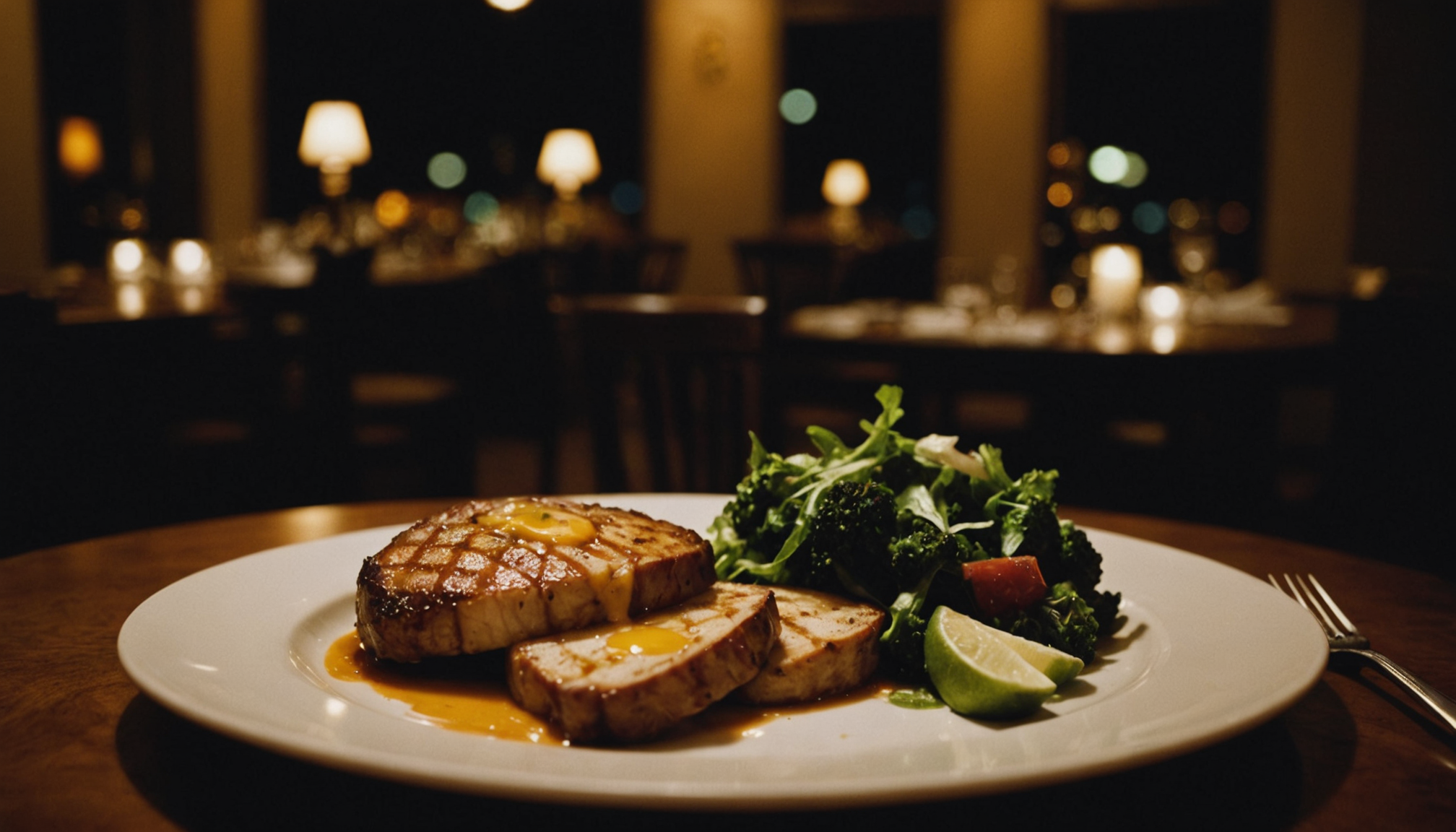
Seasonal Dinner Menu Nashville: Is Tonight's Plate Actually Fresh?
Most Nashville restaurants rotate their "seasonal" menu four times a year — the same cadence as a fast-fashion retailer swapping window displays. That's not seasonal cooking; that's quarterly inventory management with a prettier description on the website.
TL;DR:
- "Seasonal menu" is a marketing phrase unless the restaurant can tell you when the menu last changed — ask for the date, not just the story.
- Menus that turn over every two to four weeks track Tennessee's actual growing calendar; menus that turn over quarterly usually track a spreadsheet.
- Three specific questions at the table will tell you whether tonight's plate reflects this week's harvest or last month's surplus — keep reading to get them.
---
What "Seasonal" Actually Means on a Nashville Dinner Menu
Here's the honest version: seasonal means the ingredient is at peak flavor right now, in Tennessee, this week. It does not mean "we swap our butternut squash soup for asparagus when the weather warms."
Middle Tennessee has one of the most productive small-farm ecosystems in the South. By 2026, the Tennessee Department of Agriculture counted more than 1,200 direct-market farms within 100 miles of Nashville — a number that has grown steadily as chef-driven restaurants created reliable demand. That supply chain makes genuine, frequent menu changes entirely possible. The restaurants that don't do it are making a choice, not facing a constraint.
What that looks like in practice at a genuinely seasonal restaurant:
- Proteins shift with availability. Heritage pork from a specific farm in Robertson County runs when that farm has it. When it doesn't, the kitchen finds the next right thing.
- Side dishes carry the harvest calendar. If it's mid-June, ramps are gone. If you see ramps on a Nashville menu in late August, ask politely where they're sourced — then trust your instincts.
- The menu has handwritten or printed additions. Physical menu inserts, chalkboard supplements, or a server who mentions that "we just got these in Thursday" are the most reliable freshness signals you'll encounter.
The seasonal dinner menu Nashville diners deserve is one where the chef's sourcing calendar drives the print cycle — not the other way around.
---
How to Tell If a Seasonal Dinner Menu Recently Changed
The easiest test takes about 30 seconds before you sit down. Pull up the restaurant's Instagram or website. Look at the current menu listing, then scroll back 30 days. If you see identical dishes with identical descriptions, you're looking at a static menu wearing a seasonal costume.
A few more reliable tells once you're at the table:
The server knows the farms by name
This one separates kitchens that source locally from kitchens that say they source locally. If your server can tell you that the tomatoes on tonight's caprese came from a specific farm in Sumner County — not just "a local farm" — the kitchen is doing the work. Vague regionalism ("sourced from Tennessee farmers") can mean anything. A farm name means something.
The menu has a "last updated" note — or the server can give you one
Restaurants that change their seasonal dinner menu on a real cadence often print a date directly on the menu. Some do it digitally; others keep a running staff log. If neither exists and the server can't approximate when the menu last changed, that's your answer.
At least one dish is explicitly "limited"
A kitchen drawing from this week's farmers market haul will run out of things. "We only have six portions of the duck left tonight" is a good sign, not an annoyance. It means the order was placed based on actual availability, not forecasted volume from a frozen case.
If you've already done the work of evaluating how Nashville restaurants actually source their produce, these signals will feel familiar — they apply just as directly at dinner as they do at brunch.
---
Why Faster Menu Turnover Signals Kitchen Integrity
A restaurant that changes its seasonal dinner menu every three to four weeks is making a harder logistical commitment than one that changes quarterly. It means the chef is placing new orders, retraining front-of-house, reprinting menus, and building new prep lists — on a near-constant loop.
That friction is precisely the point.
A kitchen that operates this way has built real relationships with its farm partners. Orders aren't placed through a broadline distributor based on price; they're placed based on what a specific grower in Williamson County texted the chef on Monday morning. The cost of that relationship shows up in your check — but so does the difference in flavor between a tomato picked three days ago and one that traveled 900 miles in a refrigerated truck.
In 2026, the average Nashville upscale dinner check at a restaurant billing itself as farm-to-table runs roughly $65–$95 per person before cocktails. At that price point, you're entitled to know whether the kitchen is actually doing the work. Faster turnover is the clearest structural proof that it is.
This same logic applies when you're planning a larger evening out. If you're considering a date night and weighing Nashville dinner options, menu turnover cadence is one of the five criteria that genuinely separates a memorable dinner from a well-decorated one.
---
Questions to Ask Your Server Before Ordering
These three questions take less than two minutes and will tell you more about a kitchen's sourcing integrity than any review on Yelp or Google.
1. "When did this menu last change?"
The ideal answer is a specific week or date within the last three to four weeks. An acceptable answer is "we update it pretty often — there were a few new dishes added last week." A concerning answer is a pause followed by "I'm not sure, it's been the same since I started." That's a quarterly-or-less menu dressed in seasonal language.
2. "Where is the [specific protein or vegetable] from?"
Pick one item you're genuinely considering. Ask the server where it comes from — not what region, but what farm or producer. A kitchen that sources intentionally prepares their front-of-house staff to answer this question without hesitation. If the server offers to ask the kitchen, that's honest and respectable. If they deflect with "we use all-natural ingredients," that tells you what you need to know.
3. "Is there anything you got in this week that's not on the printed menu?"
This one is the clearest signal of all. Restaurants with live farm relationships frequently receive small-batch ingredients mid-week that the kitchen builds into specials or off-menu additions. A server who lights up at this question — who says "actually, yes, we got beautiful sungold tomatoes in on Wednesday" — is standing in front of a kitchen that is genuinely engaged with its supply chain.
These same instincts serve you well beyond a solo dinner. If you're planning a group dinner in Nashville and evaluating whether a restaurant can deliver on a seasonal promise for eight or ten people, ask these questions during the reservation call, not after you arrive.
---
The Price-Freshness Tradeoff Most Diners Miss
Here's the part of the seasonal dinner menu Nashville conversation that most diners skip: genuinely fresh, frequently rotated menus cost more to operate. A kitchen running on a three-week cycle re-engineers its prep, re-sources its proteins, and absorbs more unpredictability per service than one running on a quarterly cycle. That operational cost is real.
What it means for you: a slightly higher check at a restaurant with rigorous sourcing is almost always a better value than a lower check at one that photographs well but last updated its menu in February.
The math is straightforward. A $78 plate of heritage pork that was raised by a named farm 40 miles from your table and arrived in the kitchen three days ago is a different transaction than a $68 plate of "locally inspired" pork that traveled through a regional distributor with no traceable origin. The $10 difference isn't a premium — it's the cost of the relationship.
The honest signal is this: if a restaurant can't tell you where its food comes from or when its menu last changed, the "seasonal" language on the menu is a positioning choice, not a kitchen practice.
---
The next time you're choosing a Nashville dinner spot this weekend, run the test. Check the Instagram, ask the three questions, and notice whether the server answers with farm names or marketing phrases. The difference between a genuinely seasonal dinner and a quarterly menu in seasonal clothing is about two minutes of curiosity.
At Ember & Oak, we update our seasonal dinner menu every two to three weeks based on what's ready to harvest from our Tennessee farm partners — and our team can name every farm on the plate. If you want to see what's on the table this week, book your table at /contact and come find out for yourself.
<<>>