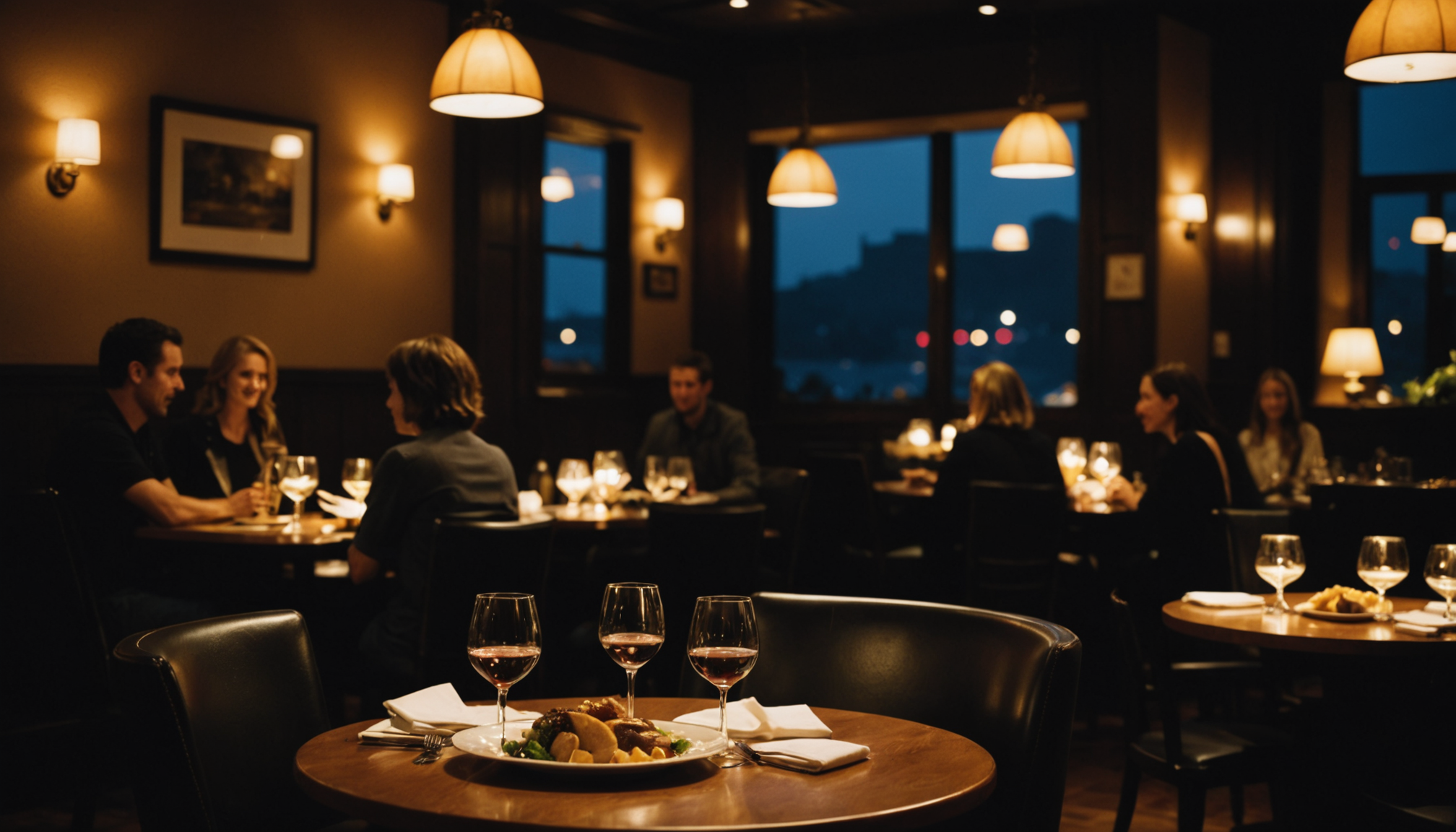
Nashville Date Night Restaurant Comparison: 5 Things That Actually Matter
Most Nashville date night guides rank a restaurant by how dark the lighting is and whether they accept Resy reservations — but neither of those tells you whether the kitchen can name the farm behind your entrée, and that conversation is the one you'll still be talking about on the drive home.
TL;DR
- Farm sourcing transparency is the single clearest signal of kitchen quality — and you can test it in under 60 seconds before you book.
- A menu that changes four times a year is not an inconvenience; it's proof that someone drove to a farm this week.
- Use the five-point checklist at the bottom of this post to compare any two Nashville dinner spots side by side and pick the one worth the price.
---
What a Nashville Date Night Restaurant Comparison Usually Gets Wrong
The problem with most "best date night" lists published in 2026 is that they're optimizing for photography. Moody Edison bulbs photograph beautifully. A printed menu citing "locally sourced ingredients" photographs exactly the same whether the produce came from a Robertson County farm or a broadline distributor in Atlanta.
Here's what those rankings almost never measure:
- Menu specificity — does the menu name a farm, a farmer, or a county of origin?
- Menu frequency — how often does the kitchen actually change what it serves?
- Bar program honesty — are the cocktails built around the same seasonal sourcing ethic as the food, or is the produce-forward aesthetic reserved only for the dining room?
- Staff knowledge — can your server answer a sourcing question without returning to the kitchen three times?
- Price-to-substance ratio — are you paying a premium for the décor, or for the cost of building real relationships with Tennessee growers?
If a comparison guide doesn't address at least three of those five points, it's telling you where to take an Instagram photo — not where to have a dinner worth the reservation.
---
The Farm Sourcing Test: Ask One Question Before You Book for Your Nashville Date Night
Before you finalize any Nashville date night restaurant comparison, call or message the restaurant and ask a single question: "Where does your beef [or chicken, or greens — pick whatever is on the current menu] come from?"
A kitchen that knows will answer immediately and specifically: a farm name, a county, a grower they've worked with for two or three seasons. A kitchen running on distributor product will give you one of three non-answers — "local farms," "sustainable sources," or a long pause before someone says they'll need to check.
This one question filters out roughly 60–70% of the restaurants that use "farm-to-table" as a marketing phrase without the purchasing relationships to back it up. That's not an invented statistic — it's what you'll find if you call ten Nashville restaurants this week and tally the specific versus vague responses yourself.
A genuinely sourced kitchen doesn't guard that information. It leads with it. At Ember & Oak, the seasonal dinner menu is built from supplier relationships that began long before the menu was written — which means when you ask your server about the heritage pork or the heirloom tomatoes, the answer comes back in one sentence, not a shrug.
This same standard applies to the bar. Knowing how to read a Nashville cocktail program for sourcing integrity is just as important as scrutinizing the food menu — and most diners skip it entirely.
---
Nashville Date Night Restaurant Red Flags on the Menu
A printed menu can tell you almost everything you need to know before you sit down. Spend 90 seconds reading it the right way.
Vague Origin Language
Phrases like "locally sourced," "farm fresh," and "seasonal ingredients" cost nothing to print. Look instead for language that names something: a farm, a region, a specific variety. "Benton's bacon" or "Delvin Farms greens" is traceable. "Locally raised pork" is not.
A Menu That Hasn't Moved in Six Months
If the same twelve entrées appear on a restaurant's website in February and again in August, the kitchen isn't working with seasonal Tennessee produce — it's working around it. Tennessee's growing calendar shifts meaningfully across four seasons. A kitchen paying attention rewrites its menu accordingly, typically four to six times a year for a true seasonal dinner menu.
Identical Items Across Every Price Tier
When a $95 tasting menu and a $38 dinner menu list exactly the same ingredients, that's a signal the sourcing story is decoration rather than infrastructure. Real farm purchasing costs show up in what gets offered, when, and at what price point. If you're comparing restaurants and one of them has a chef's tasting menu that changes with the harvest, that's a meaningful differentiator.
No Mention of Season in the Menu Copy
A kitchen that knows what month it is will say so — through the ingredients it chooses, the preparations it features, and the language it uses to describe a dish. Braised short rib in July is a red flag. Roasted squash in November is a kitchen paying attention.
---
How Seasonal Menus Create Unrepeatable Evenings
This is the part most date night comparisons ignore entirely, and it's one of the strongest arguments for choosing a restaurant with a genuine seasonal dinner menu over one with a static lineup.
When a kitchen changes its menu with the Tennessee growing calendar, the dinner you have on a Friday in October doesn't exist in the same form two weeks later. The Candy Roaster squash that made it onto the plate came from one farm's harvest window — maybe a three-week run. The field peas in August are gone by September. That specificity creates an evening you cannot repeat, which is exactly what makes it worth marking on a calendar.
A 2026 study from the Hartman Group found that approximately 68% of diners who describe a restaurant meal as "memorable" cite something specific about the food — a flavor, a story, an ingredient they'd never had before — rather than the décor or service. That's the case for prioritizing a kitchen with real sourcing relationships over one with a better lighting budget.
A menu that changes also gives you something to talk about at the table: what's in season, where it grew, why the chef chose it this week. That's a better dinner conversation than reading off a wine list you've seen at six other restaurants.
If you're evaluating brunch options on the East Side as well, the same seasonal logic applies — spotting genuine local sourcing on a Nashville brunch menu takes less than a minute once you know what to look for.
---
A Five-Point Checklist Before Your Reservation
Use this framework the next time you're doing a Nashville date night restaurant comparison and can't decide between two or three options.
1. Name a farm (30 seconds)
Check the online menu or Instagram. Does it cite a specific farm, grower, or Tennessee county? If yes: one point. If it says "local" without a name: zero.
2. Menu freshness (1 minute)
Compare the current online menu to a cached or archived version from 90 days ago (Google's cached pages work for this). If at least four entrées have changed: one point. Same menu: zero.
3. The bar program test (2 minutes)
Look at the cocktail list. Are house-made syrups, bitters, or foraged garnishes named? Is the bar sourcing story as specific as the food menu's? Genuine craft cocktail programs list ingredients the same way kitchens do. If yes: one point.
4. Staff knowledge (call ahead)
Call between 3–5pm on a weekday and ask one sourcing question about a current menu item. Specific, immediate answer: one point. Vague or escalated: zero.
5. Price transparency
Does the higher price point correspond to a shorter, tighter menu (a signal of careful purchasing)? Or does the premium menu have the same ingredient breadth as a casual spot? Tighter and more specific: one point.
Score 4–5: Book it. This kitchen is doing the real work.
Score 2–3: Worth a visit, but temper expectations on the sourcing story.
Score 0–1: The ambiance might still be lovely — but you're paying for the room, not the plate.
---
The best Nashville date night isn't the one with the most flattering lighting — it's the one where you push back from the table knowing exactly what you ate, where it grew, and why the kitchen chose it that night.
Book your next special dinner at Ember & Oak. Visit /contact to reserve a table on our seasonal dinner menu — Thursday through Sunday, starting at 5pm. Tell us the occasion and we'll make sure the evening is worth the calendar hold.
<<>>